Hello everyone! 👋
In the spring of 2021, my wife and I decided to move abroad as a couple of software engineers. We chose Germany as the country we would move to. For anyone wondering how we made that decision and why we chose Germany, I recommend this post .
After a long and exhausting interview and relocation process, we settled in Berlin in September. In this post, I’ll share what we observed during our first four months, starting from the day we arrived in Germany, and how this change made us feel.
Of course, rather than giving you four years’ worth of knowledge about Germany based on just four months of experience, I’ll mostly talk about what we encountered and what surprised us as a couple living abroad for the first time. So, let’s get started.
The First Day
During a flight, you feel many different emotions at once. Happiness, sadness, excitement, and so many other emotions. Of course, amid all the emotional confusion these feelings created, “excitement” began to take over as our plane approached Berlin Airport. As the plane slowly glided down to take us to our new home, one of our first observations was the endless stretches of green we could see below when we turned our heads toward the window.
For a very long time, until the plane landed, all we could see was a green blanket and, here and there, small settlements. This was our first encounter with Germany’s respect for nature and its approach of putting green spaces at the heart of life.
Since we had seven large suitcases with us and didn’t want to struggle on public transport after changing countries, we decided to take a taxi to our new home. On the empty road from the airport to our home, I was taking my first test in holding back my impatience with a taxi driver who didn’t exceed the speed limit by even “1 km/h.” In my mind, I grumbled to the driver, “Come on, put your foot down!” and we made our way there.
Since we had time on the road, I drifted into thought and remembered a debate I’d taken part in at high school. I was on the team representing our school. We were going to debate another school on the topic “Is education or punishment more important in traffic?” Our school had been chosen to argue that “punishment is important.”
In the detailed research we did before the debate, we looked at how accident rates in other countries fell as fines increased. We prepared our speeches that way.
The debate began in a heated atmosphere, like the panel discussions we were used to seeing on television. When it was my turn, I started speaking with the material in my hands, not feeling very confident, and cited our research. I used all of my allotted time and then sat down. When I looked at the jury to see their first reactions, it was immediately clear that I hadn’t captured their attention very much.
Then a student on the other team spoke up. Their first sentence was: “How can you defend punishment as a student at an Anatolian Teacher Training High School?” When I saw the reaction of the room and the jury after that sentence, I knew we had lost. So when the results were announced, it didn’t surprise me much.
While I was lost in these thoughts, our journey came to an end. After we got out of the taxi, we couldn’t help looking around for a while. Since we had found our apartment while we were still in Istanbul, before coming to Berlin, the building we’d be staying in, the inside of the apartment, and our new neighborhood were all completely unknown to us apart from a video call and the photos in the listing.
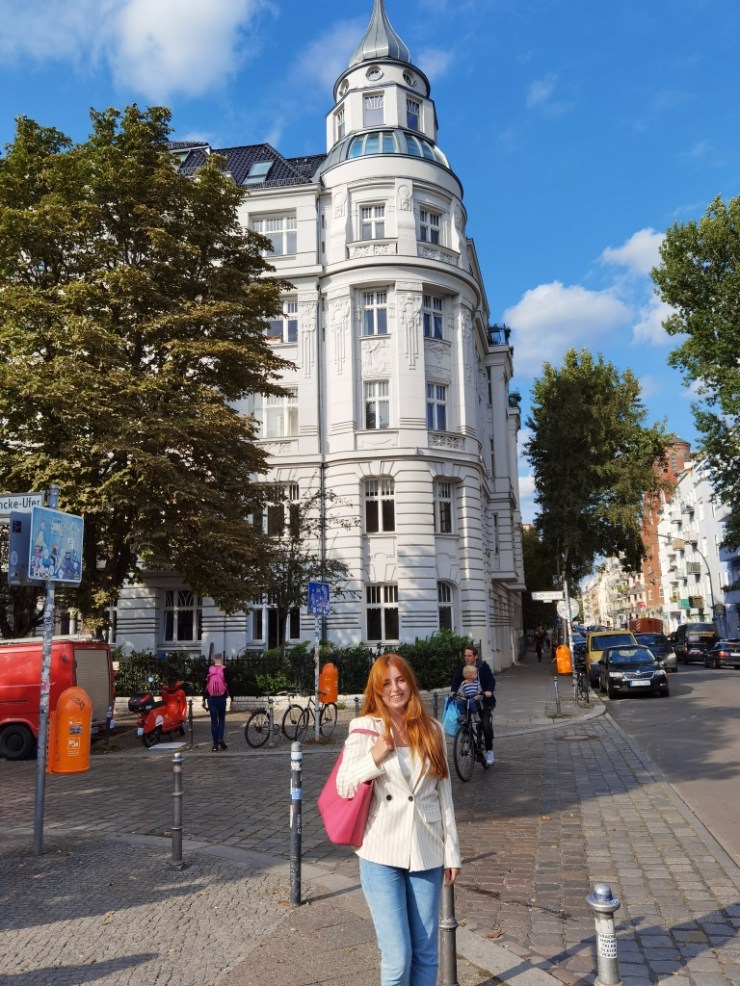
Looking carefully at the neighborhood, I saw apartment blocks stretching along the street, joined together as if they had been designed in a computer game. Alongside enough sidewalk space for two people to walk side by side, there was also a bike lane separated by a different color and markings. We had encountered a concept very different from the residential complexes in Istanbul, with landscaping and pools across huge grounds and maintenance fees that nearly matched the rent.
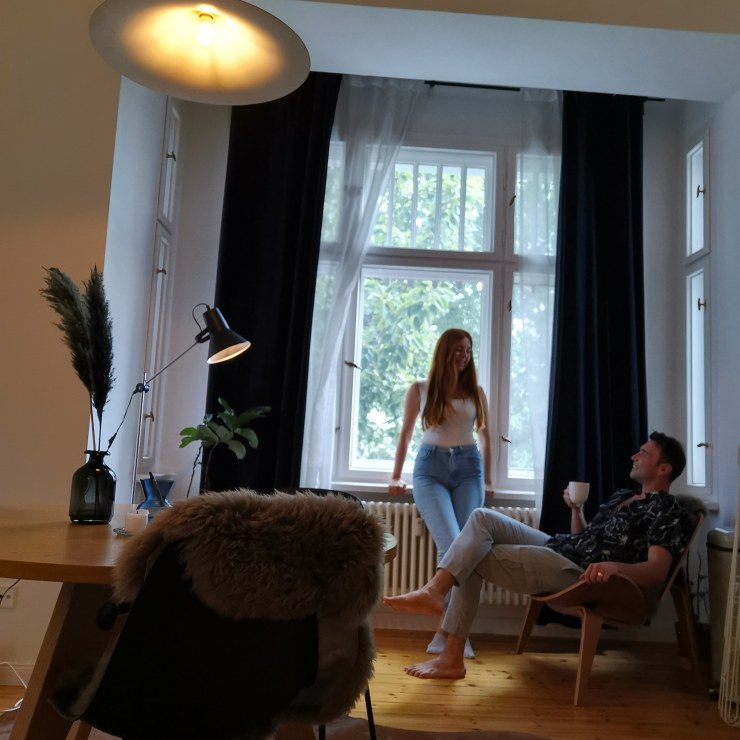
When we entered the building, we were even more surprised. It seemed quite old, with no elevator, wooden stairs, and wooden apartment doors, but it also looked very sturdy. We weren’t used to climbing stairs at all, and with our big suitcases we struggled up to the third floor, out of breath. When we went into the apartment, our surprise grew another notch. Unlike the old-looking building that seemed to have stepped out of a novel, the inside of the apartment was very modern and had a harmonious decor. The latest electronic appliances made it feel even more modern.
As we looked around the apartment, another thing that immediately caught our attention was the height of the ceilings and windows. Even though the apartment was small in square meters, the high ceilings and large windows made our new home feel very spacious. We later saw that many apartments in Berlin had these high ceilings and windows. I don’t know the architectural details behind it, but it definitely creates an airy place to live.
While talking with the real estate agent, we learned that the building had been built in 1910. Of course, the first thing I thought was, “Had we made the wrong decision by renting the apartment without seeing it?” But as time passed and we observed different buildings, we realized that this was actually part of Germany’s culture of “recycling.” They build buildings very sturdily and carry out the maintenance required by law every year so they can be lived in for a long time. The only thing that changes is the design of the interiors. I’ll share our observations about this culture of “bringing things back to life,” which amazed us most in Germany, in detail in later sections.
After settling into the apartment, we went out to explore our neighborhood, caught up in the excitement of our first day. We quickly adopted the culture of strictly following traffic rules that we’d observed in the taxi on the way back from the airport. Our first adjustment was to pay attention to pedestrian traffic lights, especially when crossing the street. This and pedestrian crossings are rules that are enforced very strictly in Germany. We recently learned that even if you don’t follow traffic rules as a pedestrian, the police assume you don’t know the rules of the road and send you to training. If you don’t attend the training, you face a fine.
Other things that immediately caught our attention were how uncrowded the streets were, despite it being a sunny weekday evening after work, and how many people were out running or walking their dogs. But we didn’t see a single stray cat or dog. In addition to what we observed on our first day, I can say that even now, in our fourth month in Germany, we haven’t seen any.
As we continued exploring our neighborhood, we were sometimes surprised to hear people walking past us speaking Turkish. Later, when we came across Turkish signs or döner shops on almost every street, we came to experience the saying “Berlin is already a small Istanbul” for ourselves.
The green spaces we’d seen from the plane continued with trees on every street, their heights competing with the apartment buildings—perhaps a century old—and large parks that we came across every twenty minutes or so on a walk. The preservation of nature and its place in everyday life was what enchanted us most on our first day. After finishing our walk, we headed home. Our first day ended by making us feel there was still so much to learn and experience.
Back to Nature
When you move to a new country, everyone probably has different expectations. My biggest expectation may sound a little unusual, but it was being able to wake up early on the weekend and go for a walk or run in a park. Of course, there are places where we could do this in Istanbul, but because of where we lived, we unfortunately didn’t have that option. It was something I’d always envied. Maybe it was because of the Hollywood movies we’d been influenced by, I don’t know, but being able to wake up early and run in a lush green park close to home gave me the feeling that I could achieve an important goal.
Once we got over our surprise on the first day, we started exploring Berlin. We discovered that there were many large parks very close to our home. Seeing the green spaces nearby made me very happy, since I’d be able to fulfill a dream I’d had for a long time.
One morning, we decided to get up early and go for a run in the park, both to explore a little and to exercise. I was really surprised when we arrived. It was practically a small forest, much more than the thing that came to mind when I thought of a “park.” It was a completely different place, spread over a large area, with some grassy parts and other areas full of very tall trees, where people ran, walked, walked their dogs, and some people did yoga or exercise in small groups. Of course, there’s no way the air could be anything but full of oxygen in a place with so much greenery. We finished exercising, enchanted by both the fresh air and the sight of a place like this.
Over time, we discovered six or seven more large parks like these in Berlin. The parks we first visited for morning exercise later became places where we’d take our coffee and a book and lie down.
Compared with our residential complex’s landscaped green space—complete with a pool, palm trees, and a grassy area just big enough for two picnic tables, which we’d enjoyed so much until a few months earlier—even though we lived in an apartment dating back to 1910, these natural wonders within walking distance, open to the public, made us feel much better. Walking barefoot on the ground, turning toward the sun, lying on the green grass and taking a deep, clean breath, sometimes exercising and sometimes reading a book—it was like returning to nature for us.
Although parks and green spaces are the main topics I wanted to emphasize in this section, that’s not all. The huge trees on both sides of the streets are also an important part of the green life here. When you wake up in the morning and open your window, seeing a tree whose branches reach almost into your home and hearing the countless birds perched on it may be one of the loveliest ways to start the day.
Since we’re already talking about nature and preserving green spaces, I have to mention another thing that surprised us quite a bit in Germany: its culture of recycling. But in this section, rather than talking about recycling plastic bottles, I’ll try to explain through my observations how life in Germany as a whole is shaped around the idea of “giving things a new life.”
Giving Things a New Life
When talking about recycling, I think the best place to start is with shopping. Since the idea of “I should buy only what I need” is common even at the shopping stage, it’s actually not very likely that things will go to waste.
The thing that surprised us most when grocery shopping was seeing people put a potato and two onions in their backpacks and finish their shopping. In addition, the use of bags has almost been eliminated. People usually choose backpacks for shopping. As a current update, they decided to completely ban the use of shopping bags in 2022.
Since water bottles are another major use of plastic, let’s talk about the measures they’ve taken in this area too. First of all, tap water is drinkable. Municipalities are responsible for bringing drinking water into apartment buildings. The system that carries it from the building into each apartment is the homeowners’ responsibility, and they are legally required to have it maintained every year. In short, tap water is safe to drink.
But I think we’d been used to ordering water for so many years that we noticed a slight difference in the taste and decided to buy bottled water. Recycling these plastic bottles is also taken very seriously. When you buy water at the supermarket, a deposit is added to the price. Then you can return your empty bottles to the bottle-return machines in supermarkets and get your deposit back.
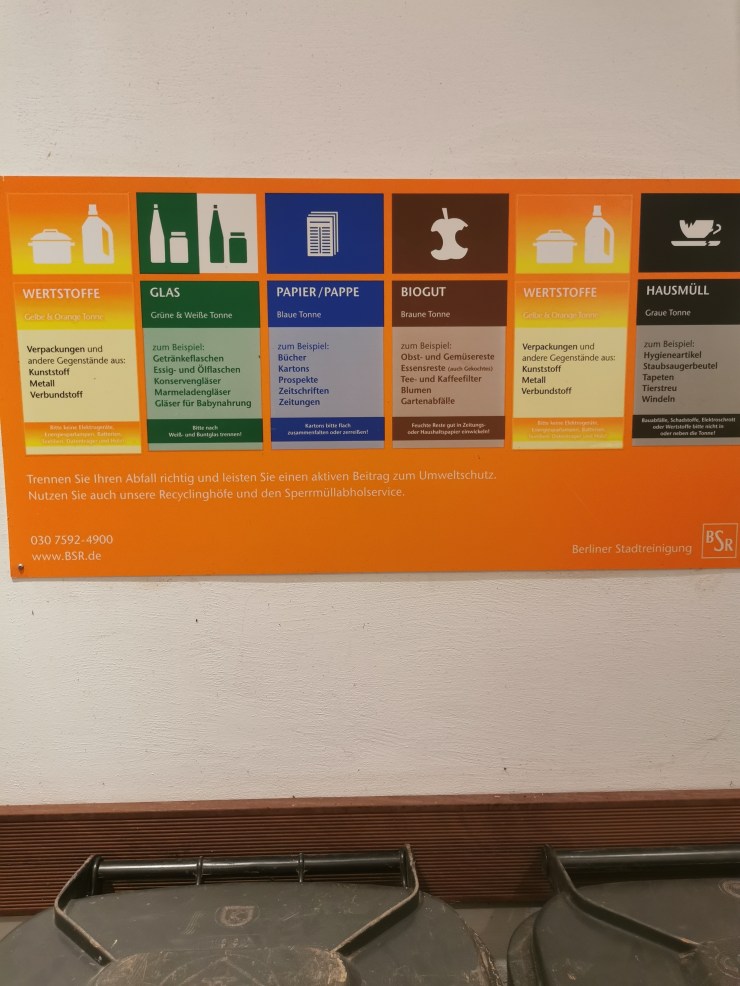
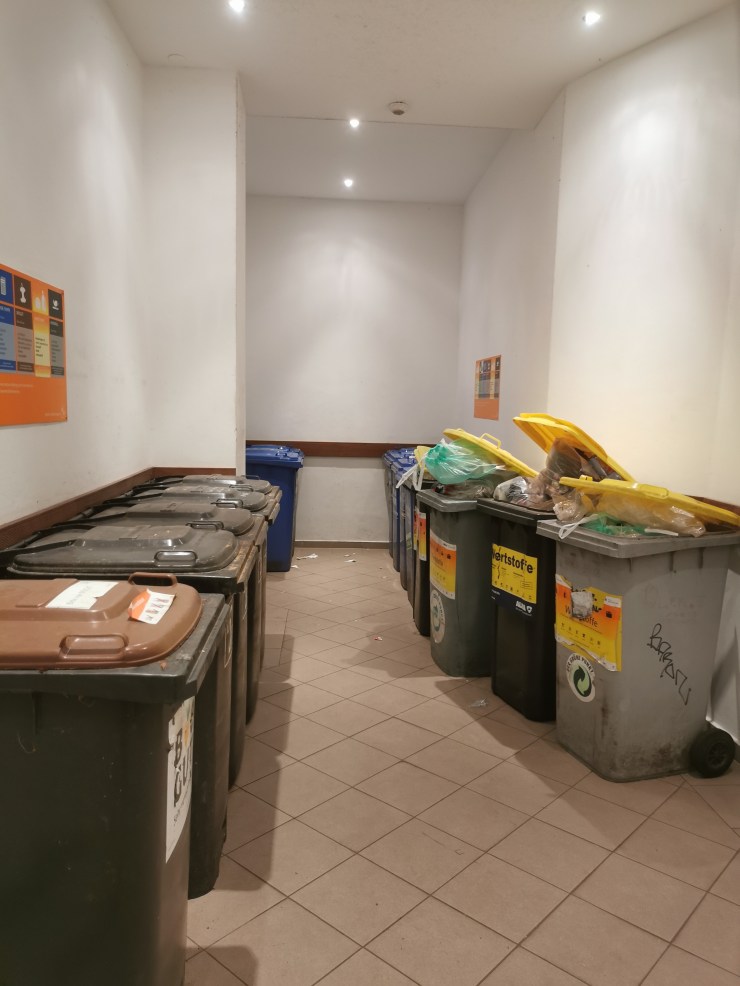
When talking about recycling, we can’t leave out the waste system. One of the things we found most difficult while adjusting to Germany was adapting to the waste system. Keeping food waste, plastic, and cardboard separate at home, then throwing them into the bins in the large waste areas in apartment buildings, is quite a bit of work, but it’s a great approach to making sure all waste can be recycled.
For example, it really impressed me that even food waste is recycled into fertilizer. Since there are quite a few rules about this, I’ll try to cover them in a separate post, but it’s hard not to be impressed by a system where everything is given another life. In fact, once you adapt to this system, you realize that the idea of “let’s buy only what we need” takes hold even in your individual consumption. Little by little, you set sail toward a life where you waste less, live more minimally, and move away from consumer society.
So what happens if we don’t want to bother and say, “We’ll put everything in one bag and throw it away”? This is where there are very serious penalties. First, the waste collectors identify your apartment building. Then the building is fined. If your neighbors identify you and “report you,” you’ll both pay a fine and be evicted from the building. Once you’ve been fined this way, it’s quite difficult to find another home. Your new landlord may ask your old landlord for a reference letter. In short, the wheels of the system keep turning. It’s best to adapt and become one of those wheels, contributing to this wonderful recycling system.
Having started with the recycling of waste, the main topic of recycling, let’s continue with other parts of this culture that seemed very different to us and that I definitely wanted to talk about—in other words, the culture of “giving things a new life.” Rather than treating this culture as simply using second-hand things, I’ll try to explain how it has become a way of life through a few examples.
I think buildings are the best place to start. Although many buildings date back a long time, they’re still in use after their interiors have been renovated. In addition to the home I gave as an example earlier, my workplace was built in 1850. From the outside, it looks like a historic building, but the inside is just as modern.
Instead of tearing down old buildings and putting up new ones, the basic approach has been to restore them, add modern touches, and give them a second life. This approach, which avoids many of the financial burdens and piles of rubble caused by a “tear it down and build a new one” system, really impressed me. Of course, building them sturdily from the outset is a prerequisite for buildings that last for centuries. By doing this, they provide a great benefit to both their economy and the environment.
Although people can’t individually control the reuse of buildings, reuse is also very popular for many items people use themselves. Markets are held on certain days for second-hand clothes, which are especially popular with younger people, and they attract quite a crowd.
In addition to markets dedicated to this, there are also many shops that sell second-hand clothes by weight. People create a style with clothes they consider “retro and vintage,” and this is quite popular in alternative culture.
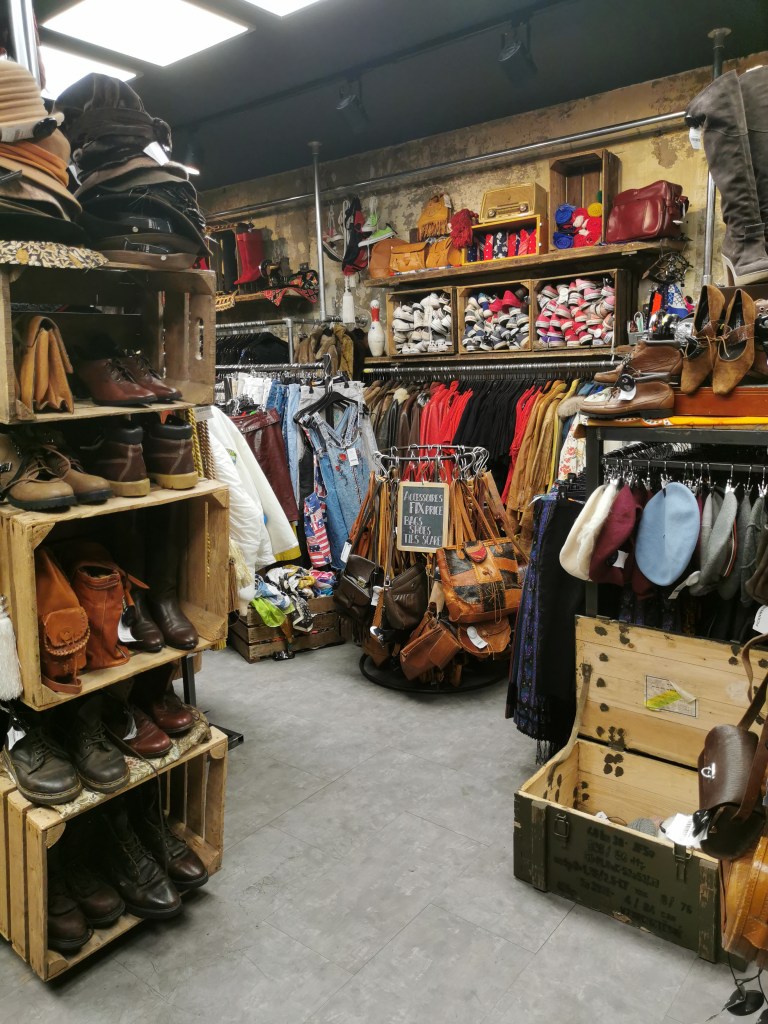
Since we’re talking about alternative culture, let’s also touch on Berlin’s alternative side, as it’s known as the alternative culture capital of Europe.
What Is Alternative Berlin?
First, let’s start by looking at what is meant by alternative culture. It can be described as a culture that forms in opposition to what is generally accepted in society. If the mainstream is dressing up for dinner and going to a fancy restaurant, alternative culture might mean having a good time at a laid-back restaurant. In the same way, creating a style with vintage and often second-hand clothes rather than expensive, popular brands is part of this culture. Or they take art to the streets and use graffiti to share messages with the public, sometimes about politics and sometimes about world issues.
Observing alternative culture with all its differences and spending time in these places lets you step away from familiar cultural norms and have a very different experience. Berlin is one of the leading capitals in Europe in this respect. The center of alternative culture in Berlin is Kreuzberg.
Kreuzberg was a neighborhood we’d heard about even while we were in Turkey, often described as “little Istanbul.” By chance, we rented our first home here too. Although Kreuzberg is a neighborhood where the Turkish community settled through the labor agreement in the 1960s and later developed its own Turkish culture, another feature is that it’s Berlin’s biggest representative of alternative culture.
When we looked into Kreuzberg’s history to understand this, we learned that after Turkish migrant workers settled in the area, young people who wanted to build their own culture and were opposed to traditional culture and society’s expectations—in other words, the hippies of that era—also came to the area, and Kreuzberg gradually became a symbol of alternative culture.
So what does this alternative culture include? I think we can start with graffiti. In Kreuzberg in particular, you can see graffiti on almost every building and on the shutters of shops, almost like works of art. Unlike the famous drawings on the remains of the Berlin Wall, graffiti in alternative culture is a form of self-expression that reflects street culture, creates more colorful and free designs, and is sometimes used to protest or express oneself. To be honest, even when walking down the street or passing by quickly on a bus, watching graffiti feels much better than looking at cold concrete buildings. Especially on Sundays, when many shops close their shutters, the streets become colorful with these works of art painted on them.
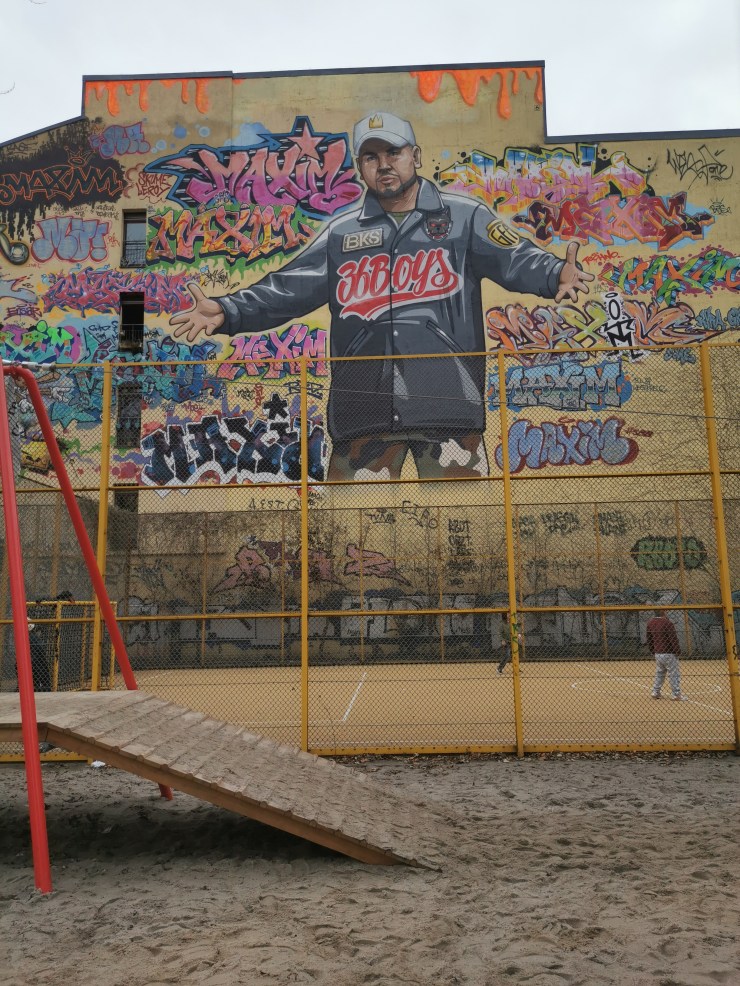
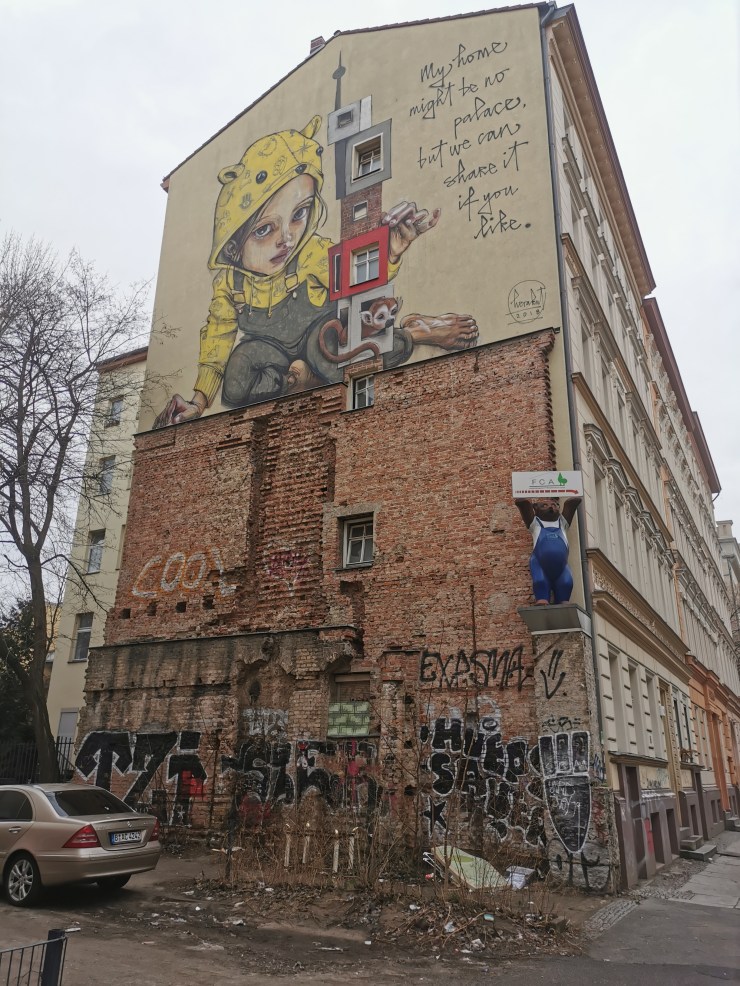
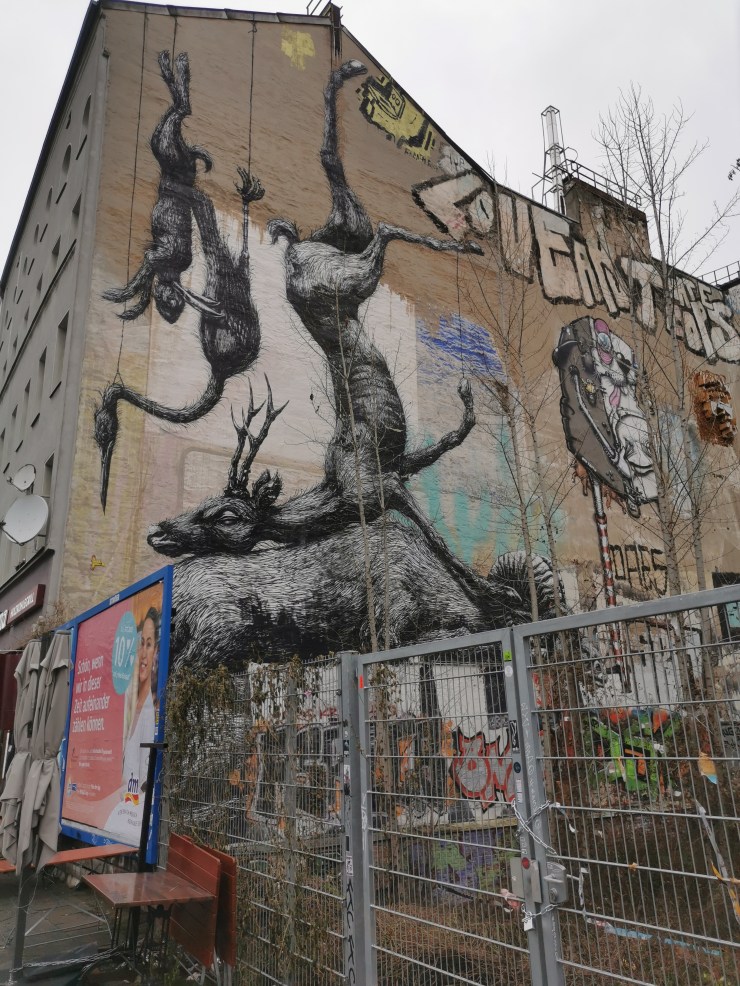
Another important thing about alternative culture is that social life is unpretentious, completely relaxed, and focused on having a good time. Rather than luxury restaurants or dressing smartly, people sometimes choose to get a drink from a completely run-down place—what you might call a “shack”—or buy something to drink at a supermarket and sit by a canal.
As I mentioned before, vintage clothing is already an important part of this alternative culture. There are dozens of stalls at the large flea markets held in Kreuzberg, and they’re very popular. People create their own style without spending a lot of money.
Since we’re talking about Kreuzberg, we can’t leave out Berlin’s Turkish community.
The Turkish Community in Berlin
Following the labor agreement in the 1960s, many Turkish families settled in Berlin, just as they did throughout Germany. Kreuzberg, which had once been home to Jewish people and had become a ghost town after the Second World War, was chosen as a place for the migrant families to settle.
Before coming to Berlin, we expected quite a large Turkish population in “little Istanbul.” When we arrived, we realized that not only was the Turkish population really quite large, but our culture had also had a noticeable effect on Berlin.
Let’s start talking about these cultural influences with food. When it comes to Turkish cuisine, everyone has heard that foreigners love your food and really enjoy eating it. But it was still quite surprising to us to learn that döner is Berlin’s most popular food.
In addition to being the most popular fast-food choice, we heard they’d also given döner a different twist, so we wanted to try it during our first week. We decided to go to a well-known Turkish döner shop that was number one on the lists.
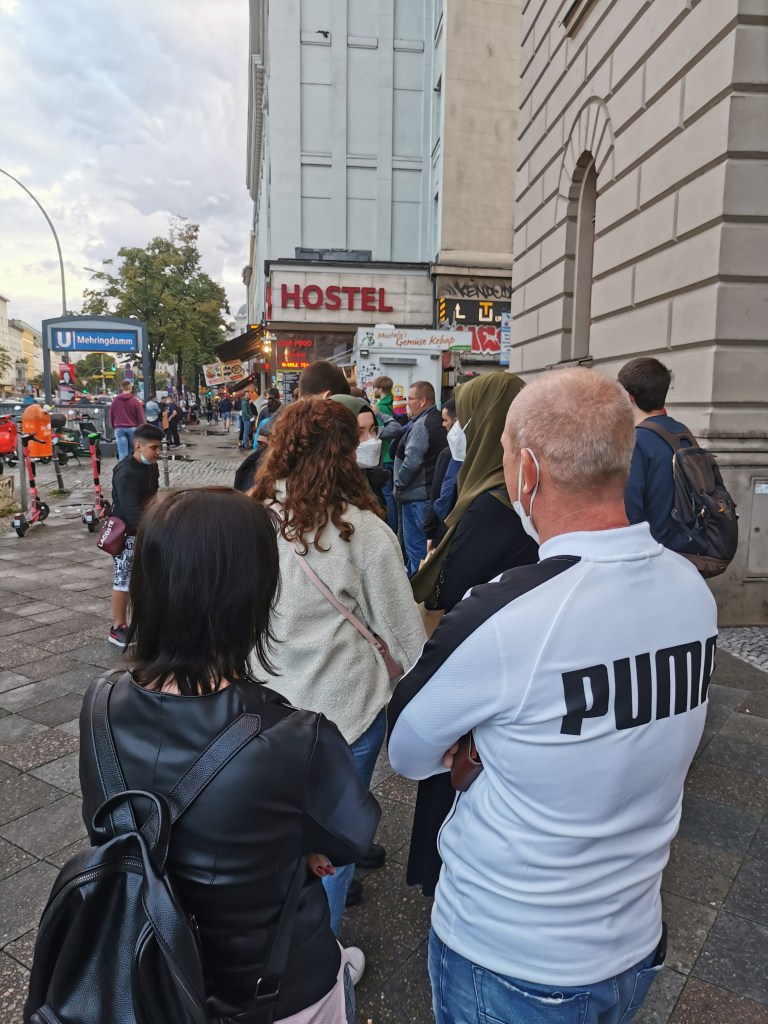
We were amazed to see dozens of people waiting outside a shop that was little more than a prefab, mobile workplace. Before getting in line, I took a closer look and couldn’t see any difference in the döner other than the chicken döner being made with lots of vegetables and cheese and plenty of sauce. Still, our curiosity got the better of us, so we got in line and started waiting.
After waiting in line for a full hour and a half in the cold and on our feet, they told us they’d run out of döner and that it would take half an hour to prepare more. Of course, we gave up, unable to wait any longer. We left the line pretty angry, too. The strange thing was that nobody else had left. After this unpleasant experience, we swore off döner in Berlin, but two months later we tried it again and really enjoyed it. These days, it’s one of our favorite fast-food options too.
Social Life
Since we’ve mentioned waiting in line, let’s also talk about the part of social life in Germany that’s hardest for us: “life moving slowly.” I don’t know if it’s because we’ve always had to get somewhere and get something done since we were children, but I’m the kind of person who wants everything done right away. I don’t think that’s just me. After all, if we went to a restaurant and they didn’t take our order in the first ten minutes, most of us would probably get up and leave.
Here, though, it’s perfectly normal for it to take twenty minutes to take your order, or even to wait in line for an hour and a half or two hours just to get into a restaurant. Since most restaurants don’t accept reservations either, you just start waiting in line. What I found interesting was that everyone accepted this and spent hours chatting in line as if it were perfectly normal. I was really surprised once when we were waiting in line at a good breakfast place and saw people buying coffee at the coffee shop next door, drinking it, laughing, and having fun.
Of course, this slow pace of life and not doing things in a panic isn’t limited to restaurants. Similar things happened to us in many places. In fact, the one that stressed me out the most happened at the Foreigners’ Office in Germany.
When I applied for a Blue Card in Germany, I went into the official’s office when it was my turn. After taking my documents, they opened a rather thick book on their desk and began looking through it. Since I don’t know German, I couldn’t understand the book at all, but I suddenly became anxious. I’d expected them to check my documents, take my fingerprints, send me on my way, and finish the whole thing in ten minutes, with the Blue Card arriving in a month. Instead, a quiet, tense wait suddenly began in the official’s office.
At one point, as the official read the book in front of them, I couldn’t contain my growing stress and asked, “Is there a problem?” When they heard this, they got a little annoyed and said, “We have time; there’s no need to rush. I have to check the law,” and sent me to the waiting room. Of course, I started waiting, both tense because I’d been kicked out of the room and unable to understand, “What do they want to look up in the constitution for my application?”
About half an hour later, they called me back into the office and we took care of the procedures. It was a lesson for me too: clearly, rushing in Germany and wanting things done right away was going to get me into trouble. You have to take care of things calmly, without stress or rushing.
The language was the biggest problem we faced in government offices and sometimes in social life, too. Although younger people spoke English very fluently, middle-aged and older people generally didn’t speak English and sometimes reacted in ways we couldn’t understand. We had a few unpleasant little incidents in different places, but I think the one we understood least happened to us at the supermarket.
When shopping, most of the time we can manage without even needing English: we pay the amount shown on the screen and then leave the supermarket saying one of the few German words we know, “thank you.”
That day, after our shopping, while I was paying, an older cashier asked me something in German after I gave her the cash. Of course, I was sure I hadn’t underpaid, since I knew the amount shown on the screen. I told her in English that we didn’t know German. But she repeated her question insistently, in a somewhat stern manner. I tried to explain that I didn’t know German with gestures too, moving my hands to somehow say, “No, we don’t know.” But the cashier wouldn’t continue the transaction and kept expecting something from us that we couldn’t understand. As I helplessly wondered what I could do, a slightly younger German person in the line translated and said, “She’s asking if you have 5 cents.” So, even though we didn’t know German, the cashier had unfortunately been engaged in a relentless struggle to get the exact change from us.
Unlike this unpleasant example, most of the time we received much warmer responses. We greet people we meet on the street with a smile. When we run into our neighbors in the building, even if it’s just a brief chat standing around, having a little conversation definitely makes you feel good. Let me end this long post by sharing a small story about our neighbors. It’s definitely something we found unusual and had to share.
One day, while we were sitting at home, the doorbell rang. Since there was no one who knew our home address in Germany and would come to visit, I opened the door saying, “I hope everything’s all right.” It was the delivery person. Even though I said we weren’t expecting a package, they took advantage of my surprise a little, saying, “This isn’t for you, it’s for your upstairs neighbor; they’ll pick it up here,” left the package, and quickly walked away.
Before I even understood what had happened, we were left holding a package in our care. Once we got over our surprise, we started worrying. “Where are we going to find this person? What if we can’t deliver the package?” and so on. Since nothing like this had ever happened to us before—and since in four years in Istanbul we hadn’t gotten beyond saying hello to our neighbors—we were very worried.
In the evening, the doorbell rang again. This time it was our upstairs neighbor. After a brief introduction, they thanked us, took their package, and left. We were quite surprised. But when another neighbor accepted our package too, we realized this was very normal. Even though we were initially shocked and anxious in a society where people trusted one another, over time, as we got used to it, we were very happy.
These were our observations during our first four months, which I’ve tried to describe at length. Getting to know a new culture and adapting to it is a very stressful process on the one hand, but very enjoyable on the other. Although many things happened to us that made us struggle, surprised us, or excited us, our greatest happiness is seeing that every day of our lives has turned into a different and exciting discovery.
Although I’ve tried to describe our first impressions in this post, I’ll keep sharing new experiences as the days go by and we have them. That’s all for now, but stay tuned 🙂
See you

