Hello everyone! 👋
After a long marathon of applications and interviews, you’ve received the offer you were waiting for and decided to move abroad. If you’re also applying for a Blue Card as your work visa, first of all, congratulations on everything you’ve achieved so far! Now it’s time for another important step: the Blue Card application.
I talked about the differences between a Blue Card and other work visas in this post . The Blue Card is a special work permit designed to attract skilled workers to European Union countries. This means that, along with the additional benefits it provides, there are also some strict requirements. A well-organized application with accurate information is very important here.
Since you’ll agree on a start date with your new company, a visa-related delay can become a major source of stress during this process. My spouse and I did a lot of research and tried to submit the best possible application. I’ll try to share every detail of our Blue Card application process for Germany.
⚠
Visa appointment procedures and required documents can change over time. In this post, I’ll talk entirely about our own experience. The latest information can be found through iDATA , the official application service for the German consulate.
Step 1: Visa Appointment
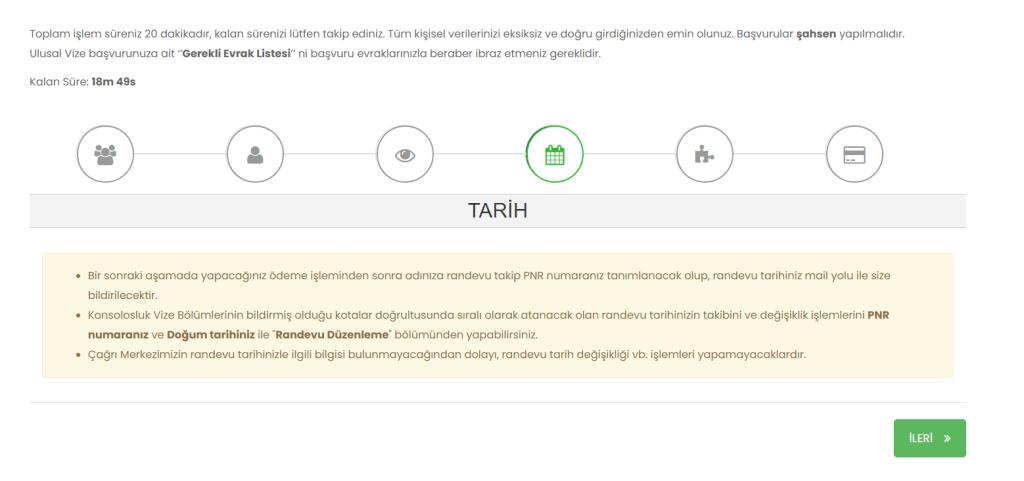
After accepting the job offer, the first thing to do about the visa process is to book a visa appointment . The main reason is that we can’t choose a date when applying for a visa; the system schedules an appointment for a date it determines. In fact, the date selection section on the application screen includes the following explanation:
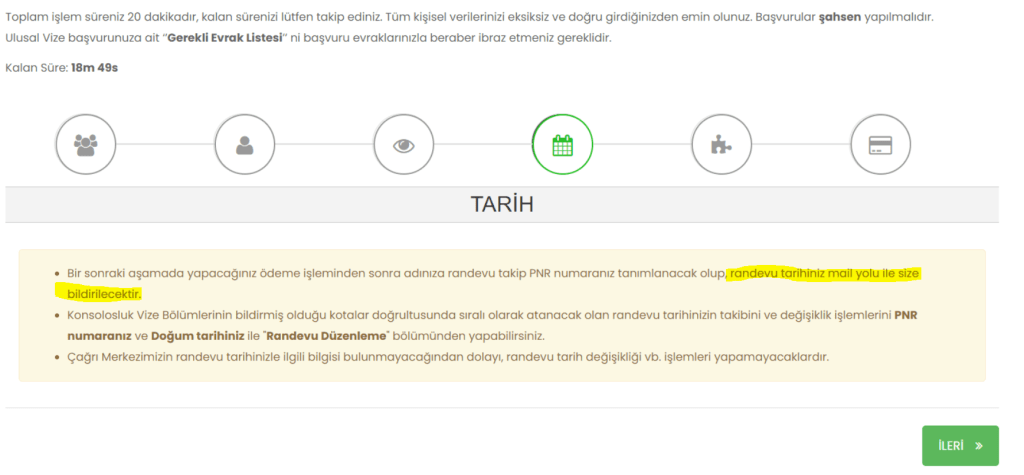
Of course, this is very uncertain. On the one hand, you think, “What if it’s a week from now and I can’t get the documents ready in time?” while on the other you think, “What if it’s much later and I miss my start date?” In our research, we saw cases where appointments were given even two months later. For this reason, I’d recommend booking an appointment as the first step.
So, here’s how we booked our visa appointment.
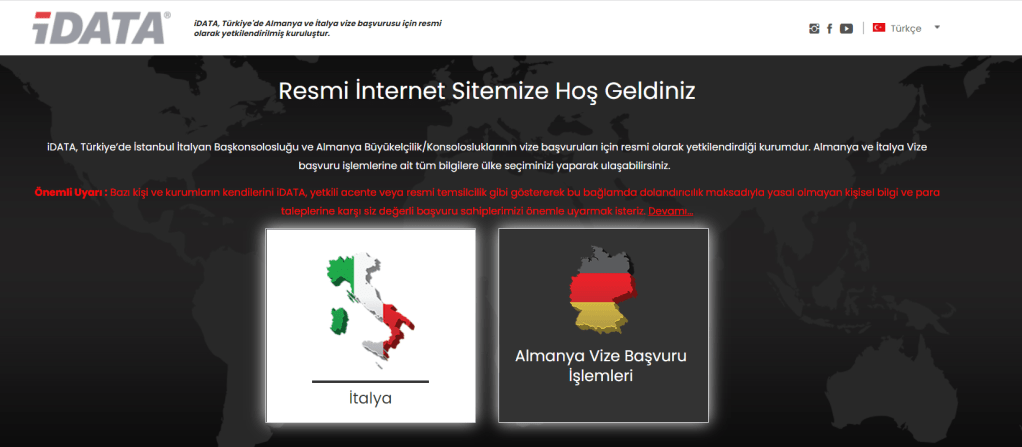
- First of all, Germany does not accept visa applications through its consulates directly. It works with an intermediary organization for this. Its official provider is iDATA. So, we’ll book our appointment through the iDATA website .
- On the home page, we select “German Visa Application Procedures”.
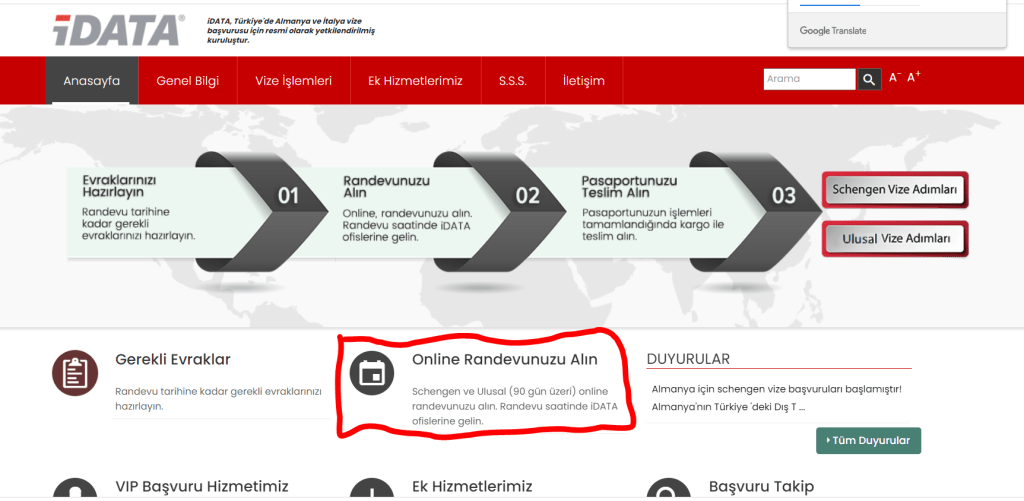
- On the screen that opens, click “Book Your Appointment Online”.
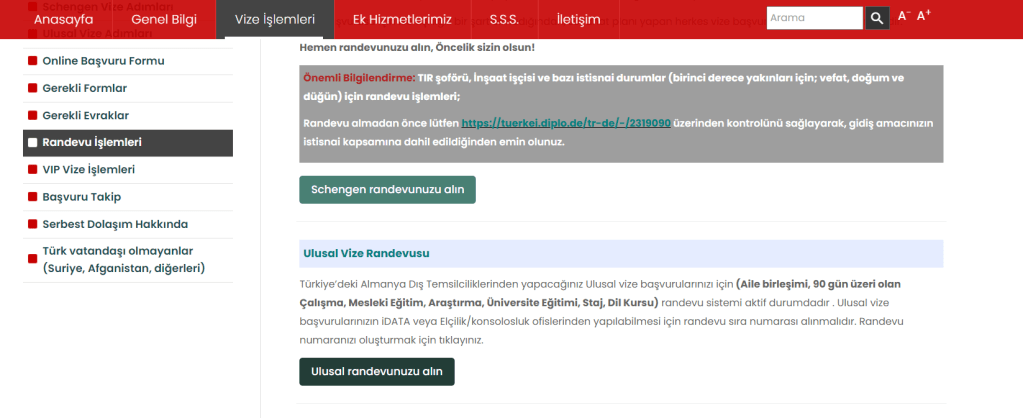
- Under Appointment Procedures, click the “Book Your National Visa Appointment” option. Blue Card applications are handled as National Visas.
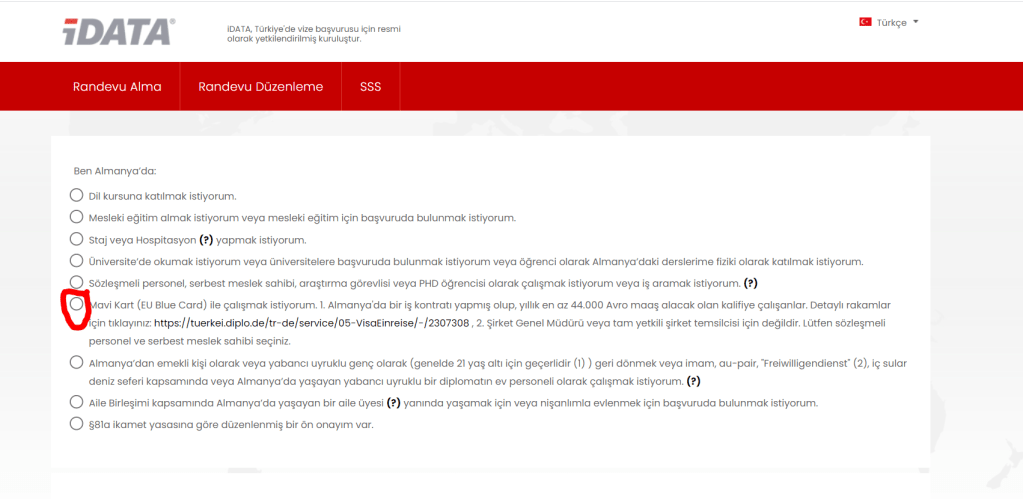
- Continue by selecting the Blue Card option.
✅
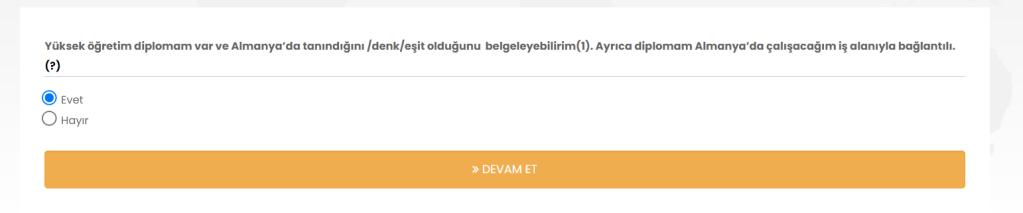
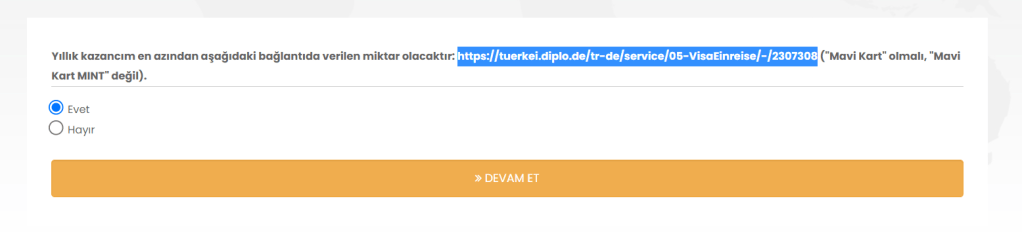
At the next stage, we’re asked some questions. One important question is “I have a higher education degree and can prove that it is recognized in Germany.” For information about university degree recognition in Germany, you can read this post .
- After the preliminary eligibility questions, we move on to the section where we enter personal information.
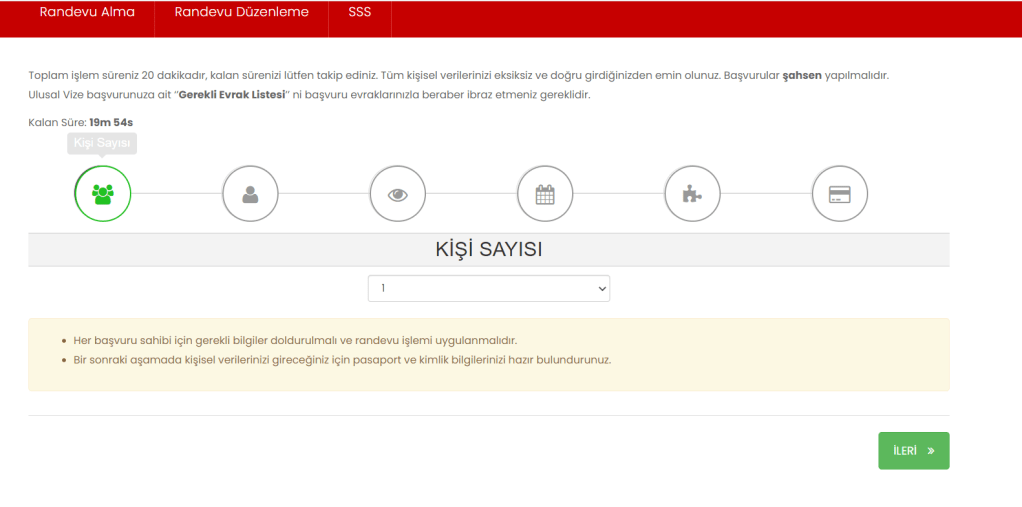
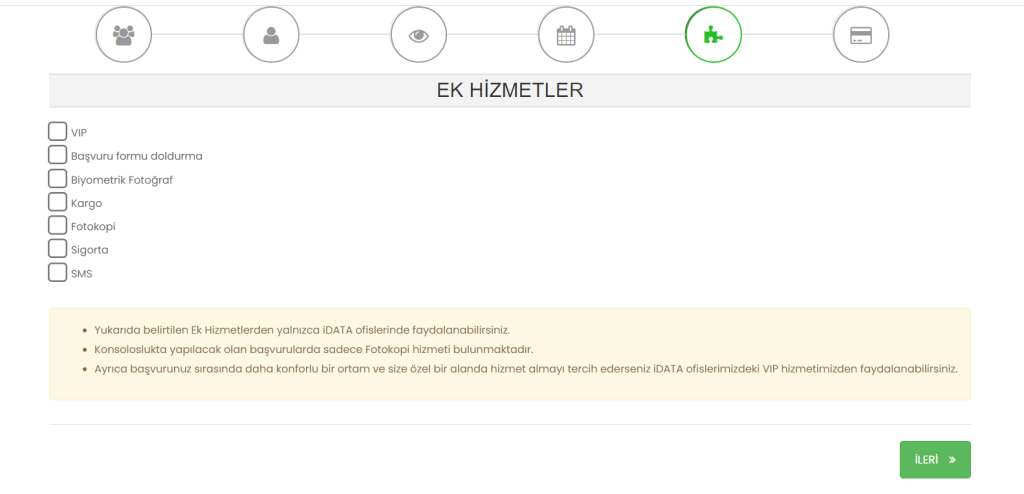
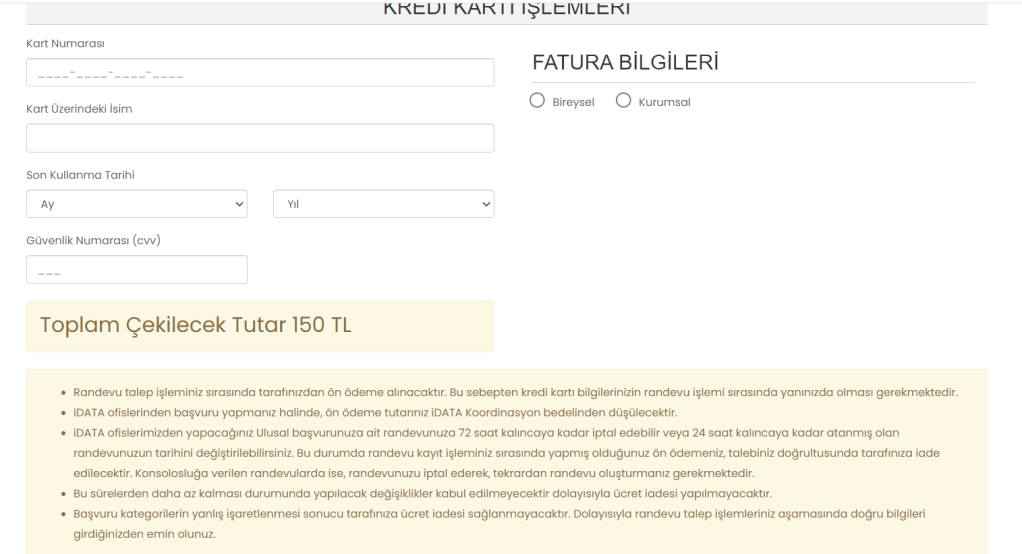
- After filling in the number of accompanying people (you can include your spouse and children so they can also use the same appointment), personal information, and additional services, we move to the payment screen.
- We paid 150 TL. This amount is paid online when making the appointment. There is also a fee paid during the application itself, which I’ll discuss later.


After making the payment, an email like this arrives at the address you used when entering your personal information:
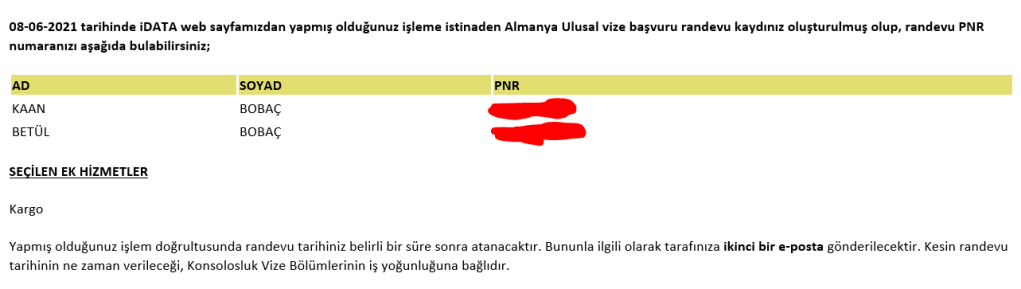
As I explained earlier, we can’t choose a date while making the appointment request. The date is assigned directly by the system.
We received an email with our appointment date the day after submitting the appointment request. It looked like this:

In short, we were able to get an appointment 14 days after submitting the request.
If our appointment is all set, let’s look at how to prepare the required documents.
Step 2: Preparing the Documents
We can list the required documents and a few helpful tips as follows:
- 2 Application Forms
The form template required for our application was at this link. We can fill out the application form online or print it out and complete it. We filled in the printed version. Since we don’t know German, we translated what we wanted to write from Google Translate into German and filled it in that way. The application form generally consists of personal information; I just want to mention a few confusing points.
 “The place where you plan to stay in the Federal Republic of Germany.” Since we hadn’t found a place to live yet, we wrote the company’s postal code and city, as in “10435 Berlin,” without giving a street number or house number. For the following question, “Where will you stay?”, we selected “Wohnung mit 2 Zimmern,” meaning a two-room apartment, and had no problems.
For the question “Purpose of your stay in the Federal Republic of Germany,” we selected “Erwerbstätigkeit,” meaning “employment.” In the next section, we were asked “Ggf. beabsichtigte Erwerbstätigkeit”—what job will you do? We wrote “Ich werde als Softwareentwickler bei XXX GmBH arbeiten,” meaning “I will work as a Software Engineer at XXX GmBH.”
✅ For the question “How long do you intend to stay in Germany?”, you can write your date of arrival – unbefristet, meaning “indefinitely.” For example, “30.11.2021 – unbefristet.”
✅ For “How will you support yourself?”, you can write “Ich werde in einem bezahlten Job arbeiten,” meaning “I will work in a paid job.”
- 2 photocopies of your passport and the page containing your personal information
- 2 biometric passport photos, no more than 6 months old.
I should definitely share an experience we had with the passport photos. We went to a photographer to have our photos taken and specifically asked for the kind required for a German visa. But during the application, we were told our photos weren’t suitable. We had to take them again ourselves using the photo booth inside the visa center.
At first I thought it was the photographer’s mistake, but when I saw how many people were using the photo booth, I realized this is probably a common mistake. Although the official document specifies photo dimensions of 35 mm x 45 mm, another important visa requirement is that the face should cover about 70–80% of the photo. You can visit this link for the original German criteria.
My accepted and rejected photos looked like this:
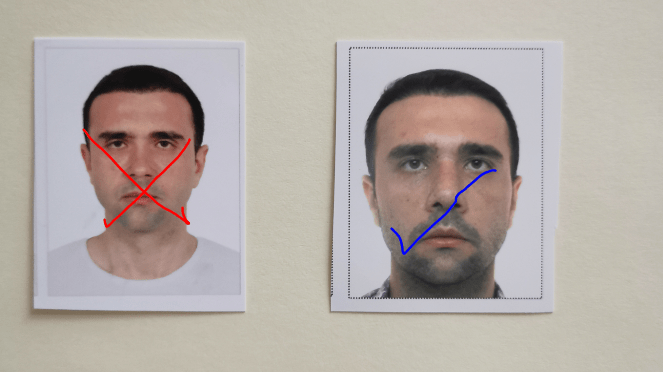
As you can see, even though the rejected photo had the correct dimensions, the accepted one was focused entirely on the face, which covered about 70–80% of the image.
Anyway, let’s get back to the topic.
- CV
We included the English-language CV with a photo that we had also used when applying for jobs among the documents. We didn’t have any issue requiring it to be translated into German.
- Employment contract
We didn’t wait for the original contract to arrive in Germany. My spouse’s company allowed them to sign the contract on an online platform and download it. In my case, I printed the contract signed by the company in color and signed it by hand. We had no problems.
- Documents proving professional qualifications (degree and recognition)
The most important point about the degree is that if it doesn’t include an English description, you must have it translated. In my case, my degree had an English description, so my original degree was enough for the application.
In my spouse’s case, the degree was only in Turkish, so we first had it translated into German by a sworn translator certified by a notary, then had that translation apostilled at the civil registry office. Apostille certification ensures that a document certified in one country is recognized in another. In this example, the document we had certified was the translation of the degree.
For the anabin degree recognition documents we also had to provide, you can follow this post .
- Documents showing professional experience (Social Security records, employment certificate)
There was no specific request for this item in the documents we were asked to provide. The exact wording was: “Documents showing professional experience to date (e.g. employment certificate, report card/diploma, barcoded Social Security service record).” So it may be helpful to share which documents we provided. We didn’t receive any feedback that these documents were insufficient or excessive.
- Social Security Registration Certificate (we got it from e-Devlet, had it translated into German, and did not get it apostilled)
- Barcoded Social Security Service Record (we got it from e-Devlet, had it translated into German, and did not get it apostilled)
- Employment Certificate (we got it from our former company in English, so no translation was needed)
- “Declaration of Employment” (“Erklärung zum Beschäftigungsverhältnis”), completed and signed by the employer
The template required for our application looked like this. Your employer in Germany fills in this document. Some companies provide a lot of support with relocation, while unfortunately there can be issues with the HR departments of others. For example, my spouse’s company had outsourced these processes entirely to another company, and that third-party company handled everything. They had prepared this document before we even asked for it.
In my case, I had to request the document myself, and it had some omissions the first time. So I asked them to send it again. If your company hasn’t sent this document, I recommend explaining the situation and urgency to the HR contact you’re in touch with, and carefully checking the document when it arrives. Another important point: we didn’t need the original. A printout of the signed, scanned document was enough.
- A document issued by the employer stating that remote work is not possible for this position and that the employee must be physically present at the workplace
⚠ This document is very important. In my own application, it was listed as a missing document, so I had to submit it again.
Although this document isn’t listed among the required documents, there is actually a hint here, which relates to this document:

Even after doing a lot of research online, we couldn’t find a template or form for this. So we asked our employers to prepare and send us a document like this. I’m sharing the document they provided as a reference:
Employer confirmation / employer confirmation

Dear Sir or Madam,

We hereby confirm that XXX, born, 1991, will be with the
COMPANY is hired as a software engineer engineer. The employment relationship is unlimited. His on boarding and his work at our office in Berlin are absolutely necessary for operation and he can not be replaced with another candidate  in such a short time.

As we are currently going through the effects of COVID-19 in a special business situation, it is extremely important that XXX is familiarized with the situation make XXX efficient. His knowledge is crucial and indispensable for
success as well as the economic stability of our company

For these compelling reasons, it's for our company is vital to XXX entry into the country to enable Germany.
Working remote is therefore not an option and are currently not possible.
- Health insurance valid until the employment contract start date
While researching insurance, we couldn’t find clear information about what kind we needed to take out. So we discussed this with insurance agents and received the following response: regardless of the type of visa, what is actually expected is travel health insurance with €30,000 coverage. We took out insurance as recommended by an agent.
One important point: if you request it, you can receive your policy in English and won’t need to have it translated. The insurance start date should be the date you plan to leave for Germany. If you want to travel a week or two before starting work, the insurance start date must cover that date so that the visa can start accordingly. To be safe, you can make the end date one day later than your start date. As of your start date, a new insurance application is made under Germany’s Social Security policy.
- Documents for those accompanied by a spouse
First, I should explain our situation a little. Since my spouse and I both found jobs, we each applied for a Blue Card separately. In other words, we didn’t go through a family reunification visa process. But we still provided the requested documents, and the staff member added them to our applications. So, which documents did we provide?
- Form B International Marriage Registration Certificate (we got it from the civil registry office; it said an apostille was not needed)
- Full civil registry record (we got it from e-Devlet, had it translated, but did not get it apostilled)
That’s a summary of the documents we collected. Although fewer documents are required than for a standard Schengen visa—for example, no flight ticket or proof of financial means—it’s very important to prepare the documents carefully and check the documents provided by your employer.
Step 3: The Application Day:
The two most important things on the day of your visa appointment are to arrive at least 15–20 minutes before your appointment time and to bring all the documents arranged in order in a folder.
At the next stage, when your turn comes, you submit the requested documents one by one and the process begins. We were asked to fill in two additional short forms. They were more like declarations, really. One stated that we speak English and have no family relationship with the employer we would work for. The other gave our address for the courier service we chose as an additional service.
I definitely recommend the courier service among the additional services. That way, your passport is delivered to you by courier after all the processing is complete.
After the document process, they direct you to the cashier. We paid a €75 visa fee and for the additional courier service. We paid in cash euros that we had brought with us. After payment, the fingerprinting process completes everything.
What happens if a document is missing?
This actually happened in our applications. As I mentioned above, both my spouse and I were missing the document stating that we had to be physically present in Germany. When this happens, iDATA still accepts your application and gives you an email address and an application number to use when identifying your application in your email. We were asked to send the missing document within 24 hours. The email address we were given and the email we sent looked like this:
Subject: EWT – APPLICATION NO
To: .visa-national@ista.auswaertiges-amt.de
Dear Sir/Madam;
We, Kaan Bobac and Betul Bobac, whose BC Nr. XXXXX have already applied for German National Visa (Blue Card) at 22.06.2021 11.00 (GMT+3) in iData Istanbul Gayrettepe Office.
During our applications, one more document was asked to provide by this mail.
Now; we are sending these documents, which are attached in the mail, in support of our visa applications to your consulate.
Your kind considerations of these documents and mail are highly appreciated.
King Regards,
Betul & Kaan Bobac
After this stressful application process, all that remains is to wait for our passports.
The Blue Card visa approved in Turkey is a visa affixed to your passport and valid for only 6 months. When you arrive in Germany, you apply to the Foreigners’ Office to convert it into a real card. You can also read about my experience with that application in this post .
Goodbye

